
Quick answer: Real estate law basics for buyers include the purchase contract, contingencies, disclosures, title, financing, appraisal, HOA or condo documents, closing documents, and deadlines that affect rights and money. Buyers do not need to become lawyers, but they should know when a question is practical, when it is contractual, and when it should go to a qualified attorney. This guide is general education, not legal advice. Real estate law varies by state and transaction.
For cost context, see attorney review costs. For a deeper look at contingencies in real estate, read the contingency guide.
Table of contents
- What real estate law covers in a home purchase
- Purchase contracts
- Contingencies
- Disclosures
- Title and ownership
- Financing and appraisal issues
- HOA and condo documents
- Closing documents
- Common legal issues buyers should watch for
- What agents can explain vs what attorneys should handle
- Buyer due diligence checklist
- HOA document review checklist
- Example scenario
- How HOA Bot fits into early due diligence
- FAQ
What real estate law covers in a home purchase
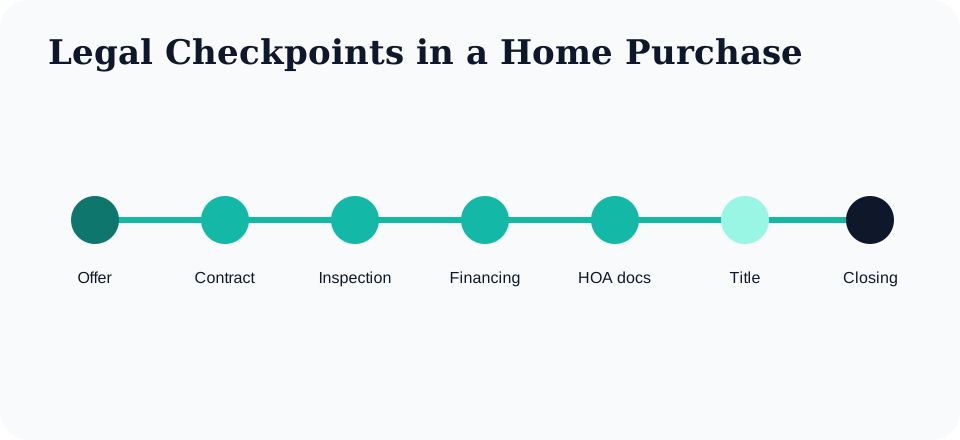
Real estate law covers the rights, obligations, documents, deadlines, and ownership transfers involved in buying or selling property. For a typical buyer, the most visible parts are the contract, contingencies, disclosures, title, financing, HOA documents, and closing papers.
The goal is not to memorize statutes. The goal is to recognize when a decision may affect your deposit, cancellation rights, use of the property, closing obligation, or future ownership cost.
Purchase contracts
The purchase contract is the written agreement between buyer and seller. It usually addresses price, property, closing date, financing, earnest money, inspections, included items, disclosures, deadlines, default, cancellation rights, and required addenda.
Buyers should know:
- what they are buying
- what money is due and when
- which deadlines protect them
- what happens if they cancel
- what seller promises are written down
- what issues are not covered unless added
If a contract clause is unclear or important to your rights, ask a qualified professional. Agents can explain process and common practice, but they should not give legal advice.
Contingencies
Contingencies are contract protections tied to specific conditions. Common examples include inspection, financing, appraisal, title, sale-of-home, and HOA or condo document review.
A contingency is only useful if the buyer understands the deadline and acts in time. Letting a deadline pass can change the buyer's options. That is why pending vs contingent status matters less than the actual contract terms.
Disclosures
Disclosures are documents where sellers provide information about known property issues or required facts. Rules vary by state and property type. Disclosures may cover water damage, repairs, pests, roof issues, systems, environmental conditions, insurance claims, neighborhood issues, or association matters.
Buyers should read disclosures line by line. If something is vague, ask for details before the relevant deadline.
Title and ownership
Title deals with ownership rights. Title review may identify liens, easements, restrictions, unpaid taxes, unreleased mortgages, judgments, boundary issues, or other exceptions.
Buyers should ask what exceptions will remain after closing and whether title insurance is available. If a title issue seems unclear or serious, legal review may be appropriate.
Financing and appraisal issues
Financing and appraisal are not only lender topics. They affect contract performance. If the loan is not approved, the property is not eligible, insurance is unavailable, or appraisal is low, the buyer's options depend on the contract.
For condos, lenders may review the association. Insurance, reserves, litigation, rental concentration, commercial space, delinquency, or project documents can affect approval depending on loan type and lender rules.
HOA and condo documents
HOA and condo documents tell buyers how the community operates and what owners must follow. They can affect daily life and resale value.
Review documents for:
- fees, transfer charges, move-in fees, capital contributions, and special assessments
- CC&Rs, declaration, bylaws, and rules
- rental caps, lease minimums, short-term rental restrictions, and waitlists
- pet rules, parking rules, vehicle restrictions, and architectural approvals
- maintenance responsibility between owner and association
- reserve study, budget, financial statements, and insurance
- meeting minutes, litigation, claims, and construction issues
Closing documents
Closing documents may include settlement statements, loan documents, deeds, affidavits, title documents, escrow instructions, prorations, tax forms, and association transfer paperwork.
Buyers should compare final numbers with earlier estimates and ask about anything that changes. Closing is not the time to discover a misunderstood fee, missing credit, or unresolved document issue.
Common legal issues buyers should watch for
- contract deadlines that are shorter than expected
- ambiguous repair agreements
- earnest money exposure
- seller promises not written into the contract
- title exceptions that remain after closing
- undisclosed property condition issues
- HOA restrictions that conflict with intended use
- rental bans, pet limits, or parking restrictions
- special assessment authority or pending association disputes
- insurance requirements or high deductibles
- occupancy, leaseback, or tenant issues
What agents can explain vs what attorneys should handle
Agents can usually explain transaction process, market practice, forms used in the brokerage or MLS environment, deadlines, negotiation strategy, and practical next steps.
Attorneys should handle legal advice, legal rights, interpretation of ambiguous clauses, custom legal language, disputes, title defects, cancellation consequences, and state-specific legal questions.
When in doubt, ask: "Is this a process question or a legal rights question?" If it is about rights, obligations, liability, or consequences, get qualified legal advice.
Buyer due diligence checklist
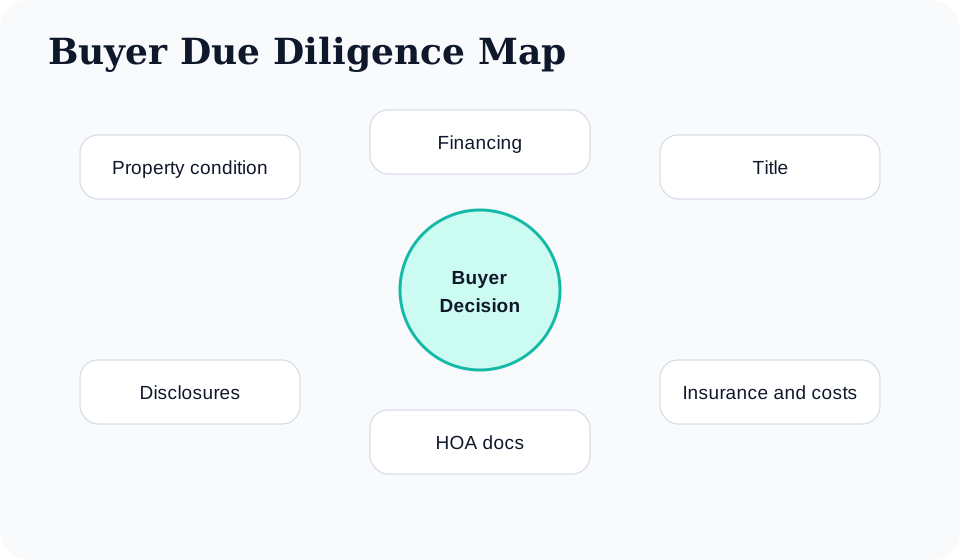
- inspection and condition review
- seller disclosures and follow-up questions
- financing approval and lender conditions
- appraisal risk and gap plan
- title review and title insurance questions
- HOA or condo document review
- insurance availability and cost
- property tax, closing cost, and monthly payment review
- legal review for unclear contract or rights questions
HOA document review checklist
- CC&Rs or declaration
- bylaws
- rules and regulations
- budget and reserve study
- financial statements
- meeting minutes
- fee schedule and transfer fees
- special assessments and assessment authority
- insurance summary and deductibles
- rental, pet, parking, and architectural rules
- litigation, claims, or construction defect references
Example scenario
A buyer signs a contract for a townhome. During document review, they discover rental restrictions and meeting minutes discussing a possible special assessment for roof replacement. The buyer planned to rent the property after two years if work required a move.
The buyer should not ignore the issue because closing is close. They should ask the agent what deadlines remain, ask the lender whether association details affect financing, use HOA Bot or a careful manual review to summarize the relevant document sections, and consult an attorney if they need legal advice about cancellation rights or restriction language.
How HOA Bot fits into early due diligence
HOA Bot helps turn a large HOA or condo packet into a plain-English review. Buyers and agents can use it to identify rules, fees, assessment risk, reserve issues, rental limits, pet rules, parking restrictions, insurance concerns, and questions to ask earlier.
It is not a law firm and does not provide legal advice. It is a practical document review tool that can help you prepare for better agent, lender, or attorney conversations.
FAQ
Is this legal advice?
No. This article is general education. Real estate law varies by state, contract, and facts. Consult a qualified real estate attorney for advice about your transaction.
What are real estate contract basics buyers should know?
Know the price, deadlines, deposit rules, contingencies, financing terms, closing date, included items, seller obligations, and cancellation consequences.
What legal issues in real estate commonly surprise buyers?
Common surprises include missed deadlines, title exceptions, unclear repair language, HOA restrictions, rental limits, assessment risk, and earnest money consequences.
Are HOA rules legal issues or practical issues?
They can be both. A rental restriction may be a practical problem for your plans and a legal question if you need to understand enforceability, rights, or contract options.
What should agents avoid doing?
Agents should avoid giving legal advice, interpreting legal rights, drafting custom legal language outside their role, or telling a buyer what the law requires unless qualified to do so.
When should I call an attorney?
Consider legal review when a question affects your rights, deposit, cancellation options, title, contract language, or use of the property.
Conclusion
Real estate legal basics are about knowing where risk enters the transaction. Contracts, contingencies, disclosures, title, financing, HOA documents, and closing papers all deserve attention. Buyers and agents do not need to turn every issue into a legal crisis, but they should know when to slow down and get the right professional involved.