
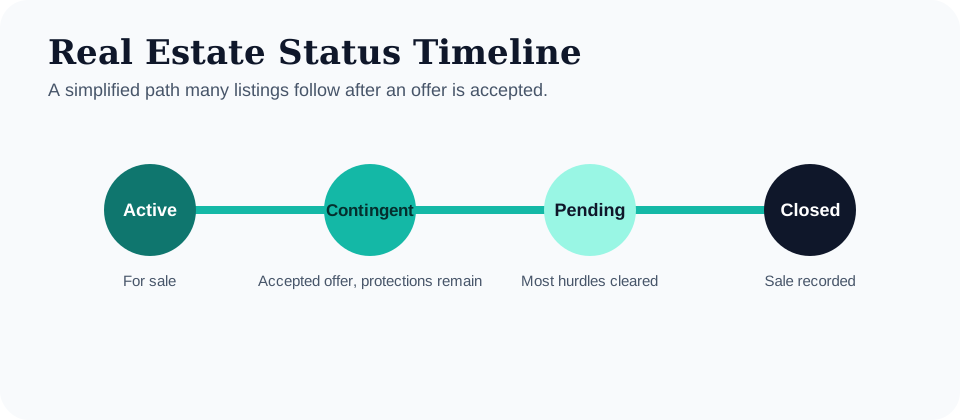
Quick answer: In real estate, contingent means a seller has accepted an offer, but the sale still depends on one or more conditions being satisfied. Those conditions may involve inspection, financing, appraisal, sale of the buyer's current home, or HOA and condo document review. A contingent home is not fully available like an active listing, but it is not closed either. Buyers may still be able to submit a backup offer depending on the seller, local practice, and contract status.
If you are comparing terms, see this deeper guide to pending vs contingent, then use this article to understand what needs to happen before a buyer removes protections.
Table of contents
- What does contingent mean in real estate?
- Common types of contingencies
- Contingent vs pending vs under contract comparison table
- What this means for buyers
- What this means for real estate agents
- Mistakes buyers make when they hear a home is contingent
- What buyers should review before removing contingencies
- Example buyer scenario
- How HOA Bot can help with document review
- FAQ
What does contingent mean in real estate?
The contingent meaning in real estate is simple: the property has an accepted offer, but the deal is conditional. The buyer and seller are under contract, yet the buyer still has agreed protections or deadlines to complete.
A contingent house meaning is not "sold." It means the seller has chosen an offer and the buyer is working through due diligence. If a contingency is not satisfied, the buyer may have a contractual right to cancel, renegotiate, or request a fix, depending on the contract language and local rules.
The contingent offer meaning matters because it tells buyers and agents that the transaction is still alive but not guaranteed. A backup buyer may still have a reason to watch the property, especially if the contingency involves financing, inspection issues, a sale-of-home deadline, or association documents that have not been reviewed.
Common types of contingencies
Inspection contingency
An inspection contingency gives the buyer time to investigate the physical condition of the property. The buyer may review the roof, foundation, plumbing, electrical system, HVAC, pests, drainage, appliances, and safety issues.
The important question is not only "Did the house pass inspection?" Homes do not pass or fail like an exam. The question is whether the buyer understands the condition, cost, and urgency of repairs before continuing.
Financing contingency
A financing contingency protects the buyer if the loan cannot be approved under the contract terms. It may involve income verification, credit, debt-to-income ratios, property eligibility, condo project review, insurance, or lender conditions.
Buyers should stay in close contact with the lender. A preapproval is helpful, but it is not the same as final loan approval.
Appraisal contingency
An appraisal contingency deals with valuation risk. If the appraisal is lower than the purchase price, the lender may not lend based on the full contract price. The buyer may need to renegotiate, bring more cash, or use rights allowed by the contract.
Before removing this protection, buyers should know how much appraisal gap they can truly handle without draining emergency funds.
Sale-of-home contingency
A sale-of-home contingency means the buyer's purchase depends on selling another property. Sellers may view this as a larger risk because one transaction depends on another.
For buyers, the key is timing. Ask what happens if the current home does not sell on schedule, if that buyer cancels, or if closing dates no longer line up.
HOA or condo document review contingency where applicable
For a condo, townhome, or HOA property, document review can be as important as a physical inspection. The packet may include CC&Rs, bylaws, rules, budgets, reserves, meeting minutes, insurance summaries, litigation notices, fee schedules, resale certificates, rental rules, pet rules, parking rules, architectural standards, and special assessment information.
This is where many buyers discover issues that were not obvious during the showing. A condo may look perfect but prohibit short-term rentals. A townhome may have exterior change restrictions. A community may have a reserve concern or a special assessment discussion buried in meeting minutes.
Contingent vs pending vs under contract comparison table
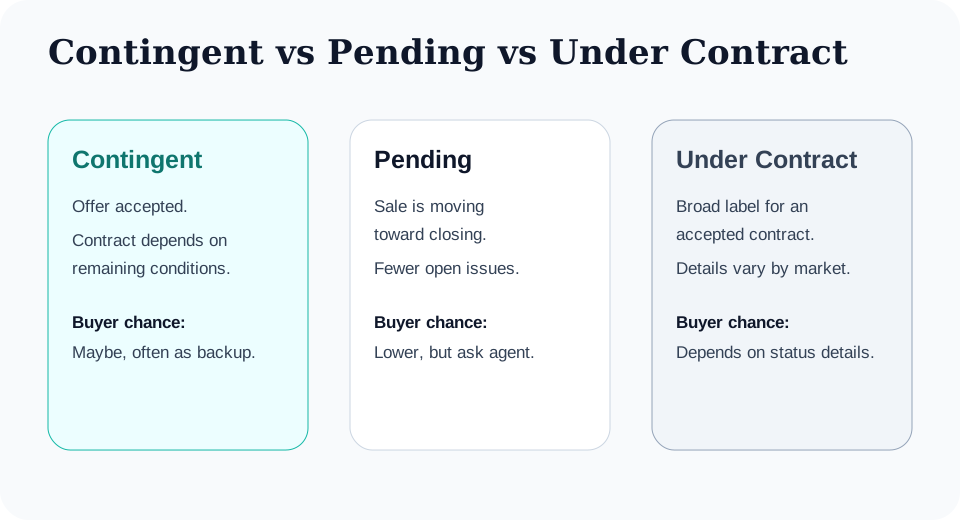
| Status | Plain-English meaning | Can another buyer make an offer? | What may still go wrong? | | --- | --- | --- | --- | | Contingent | Offer accepted, but one or more conditions remain open | Sometimes, often as a backup offer | Inspection, financing, appraisal, home sale, title, HOA documents | | Pending | The deal is moving toward closing and major contingencies may be resolved | Sometimes, but less likely | Financing delay, title issue, closing problem, last-minute walkthrough issue | | Under contract | A broad label meaning seller and buyer have a signed contract | Depends on whether it is contingent or pending | Depends on the remaining terms and deadlines |
The phrase under contract meaning can be less precise than buyers expect. In some markets, under contract means roughly the same as contingent. In others, it simply means the property has an accepted contract, while the MLS uses separate labels for contingent and pending.
What this means for buyers
If a home is contingent, do not assume it is impossible to buy. Ask your agent what the contingency is, whether the seller is accepting backup offers, and whether the listing agent can share any status details.
If you are already the buyer under contract, contingent status means your clock is running. Track every deadline. Do not wait until the day before contingency removal to read inspection reports, lender conditions, title documents, disclosures, or HOA documents.
Buyers should ask:
- What contingencies protect me right now?
- What is the deadline for each one?
- What happens if I miss a deadline?
- What documents are still missing?
- What questions need answers before I remove a protection?
What this means for real estate agents
Agents should translate status language into practical next steps. A buyer does not just need to know that a home is contingent. They need to know whether there is still a realistic path, what backup offer etiquette looks like locally, and how to avoid wasting energy on a deal that is unlikely to reopen.
For clients under contract, agents should make deadlines visible and tie each deadline to a review task. The best service is not just scheduling inspections. It is helping clients understand what the inspection, lender, title, disclosure, and HOA documents mean for their decision.
Mistakes buyers make when they hear a home is contingent
- They assume the home is definitely sold.
- They assume a backup offer is pointless without asking.
- They keep emotionally chasing one property instead of monitoring alternatives.
- They ignore why the deal is contingent.
- They remove their own contingencies before reviewing documents.
- They treat HOA rules and fees as minor paperwork.
The last mistake can be expensive. HOA documents can affect monthly cost, rental options, pets, parking, renovations, insurance responsibility, and resale flexibility.
What buyers should review before removing contingencies
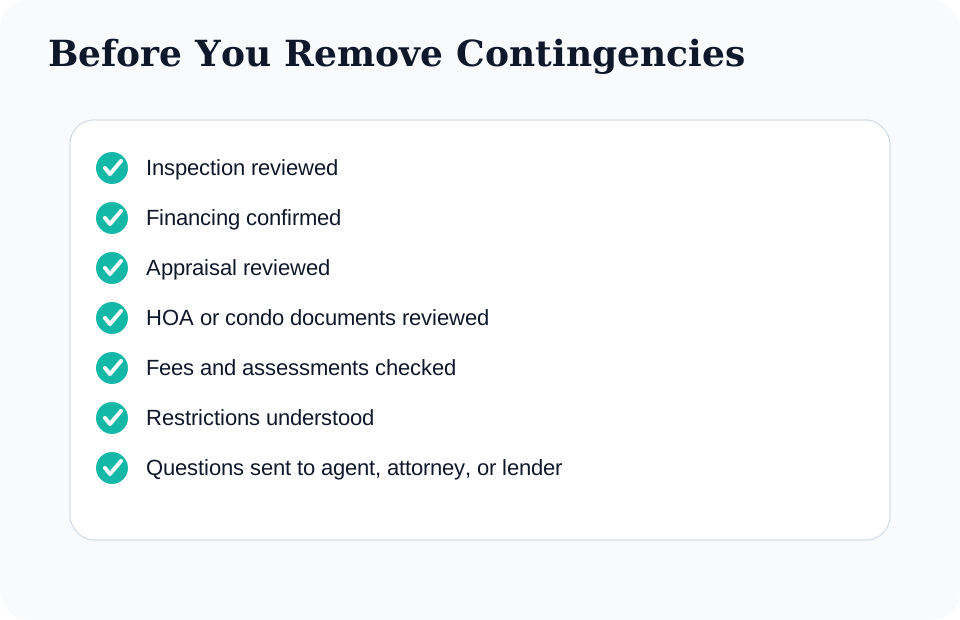
Before removing contingencies, review:
- inspection report and repair priorities
- lender conditions and loan approval status
- appraisal result or appraisal gap plan
- title report and ownership issues
- seller disclosures and unanswered questions
- HOA or condo documents if applicable
- monthly dues and special assessment exposure
- rental, pet, parking, architectural, and leasing restrictions
- insurance responsibility and deductibles
- written questions sent to your agent, lender, inspector, or attorney
If legal questions come up, ask a qualified professional. Laws, contract forms, and cancellation rights vary by state and by transaction. For cost planning, this guide to real estate attorney fees explains common fee structures without giving legal advice.
Example buyer scenario
A buyer makes an offer on a condo. The listing becomes contingent. The inspection is manageable, and the lender says the buyer looks strong. The buyer is tempted to remove all contingencies quickly to reassure the seller.
Then the condo packet arrives. The rules prohibit rentals shorter than six months, the meeting minutes discuss a possible roof assessment, and the budget shows insurance costs rising. None of these automatically kill the deal. But they change the buyer's risk conversation.
A better approach is to pause, summarize the issues, ask the agent which items can be clarified, ask the lender whether the association information affects financing, and consult an attorney if contract or legal rights are unclear. For broader background, read real estate law basics.
How HOA Bot can help with document review
If the property includes an HOA or condo association, HOA Bot can help you do a first-pass review of the documents before you send questions to your agent or attorney. It can surface fees, restrictions, reserve concerns, special assessment clues, rental rules, pet rules, parking limits, and questions worth asking earlier.
FAQ
What is contingent in real estate?
Contingent means the seller accepted an offer, but the sale still depends on certain conditions being satisfied. Common examples include inspection, financing, appraisal, sale of the buyer's home, and HOA or condo document review.
Is contingent the same as pending?
Not usually. Contingent generally means important conditions are still open. Pending usually means the transaction is further along, although exact definitions vary by MLS and market.
Can I make an offer on a contingent house?
Sometimes. The seller may accept backup offers, or they may not. Ask your agent to contact the listing side and confirm what is possible.
What does under contract mean in real estate?
Under contract means the buyer and seller have a signed agreement. It does not automatically tell you whether contingencies remain, so ask whether the property is contingent, pending, or accepting backups.
Should I remove contingencies quickly to make the seller happy?
Only after understanding the risk. Removing a contingency before reviewing inspection, financing, appraisal, title, disclosures, and HOA documents can leave you with fewer options if a problem appears later.
Are HOA document review contingencies common?
They are common enough in HOA and condo transactions that buyers should ask how document review works in their contract and market. The exact rights and deadlines vary, so ask your agent or a qualified professional.
Conclusion
Contingent means the home is under contract, but the deal still depends on conditions. For buyers, the practical lesson is simple: status labels matter less than deadlines, documents, and unanswered questions. Before contingencies are removed, review the property, financing, appraisal, title, disclosures, and HOA documents carefully enough to know what risk you are accepting.