
Quick answer: Real estate attorney fees are the costs a buyer, seller, or other party may pay for legal help in a transaction. Fees may cover contract review, closing document review, title issues, negotiation language, HOA or condo document questions, or unusual deal terms. Costs vary by location, fee model, complexity, timeline, and the scope of work. This article is general education, not legal advice. Laws and contract rules vary by state, so consult a qualified real estate attorney for advice about your situation.
If you are trying to understand how legal review fits into deadlines, also read real estate legal basics and this guide to contingency review.
Table of contents
- What are real estate attorney fees?
- What real estate attorneys may help with
- Common fee structures
- Why attorney fees vary
- When a buyer should consider legal review
- What to organize before calling an attorney
- HOA and condo documents buyers should review
- How to reduce wasted attorney time by preparing better questions
- What HOA Bot can and cannot do
- Example scenario
- Checklist: what to prepare before attorney review
- FAQ
What are real estate attorney fees?
Real estate attorney fees are charges for legal services connected to a property transaction. Depending on the state, transaction type, and client need, an attorney may review contracts, advise on legal rights, prepare or review closing documents, address title problems, negotiate contract language, or help the buyer understand legal consequences.
The phrase real estate lawyer fees can mean different things. One buyer may pay for a short contract consultation. Another may pay for a closing package. Another may need hourly help because the deal has litigation, title defects, unusual seller terms, or complicated HOA documents.
What real estate attorneys may help with
Contract review
An attorney may review the purchase agreement, addenda, deadlines, cancellation rights, earnest money language, repair terms, financing language, appraisal terms, and document review provisions.
Title issues
Title issues can involve ownership, liens, easements, boundary concerns, unreleased mortgages, estate matters, or other claims. Title companies and attorneys have different roles depending on the state and closing process.
Closing documents
Attorney review may include settlement statements, deeds, affidavits, loan documents, prorations, escrow instructions, and other closing paperwork.
HOA or condo document questions
For HOA, condo, and townhome purchases, legal questions may involve CC&Rs, bylaws, rules, resale certificates, rental restrictions, assessment authority, litigation, insurance responsibility, or owner maintenance obligations.
Negotiation language
An attorney may help draft or review language for repairs, credits, seller obligations, possession after closing, unusual contingencies, or dispute resolution.
Disputes or unusual deal terms
If the transaction has a conflict, missed deadline, ambiguous contract term, undisclosed issue, or unusual seller condition, legal review may be especially important.
Common fee structures
Flat fee
A flat fee is a set amount for a defined service, such as contract review or a closing package. Buyers should ask what is included and what would cost extra.
Hourly
Hourly billing charges for time. It may be used when the issue is open-ended, complex, or likely to require negotiation and follow-up.
Closing package fee
Some attorneys charge a package fee for closing-related work. The scope varies, so ask whether it includes contract review, title review, document preparation, attendance at closing, or only specific closing tasks.
Consultation fee
A consultation fee may cover an initial call or meeting. Ask whether document review is included or whether the consultation is limited to general discussion.
Why attorney fees vary
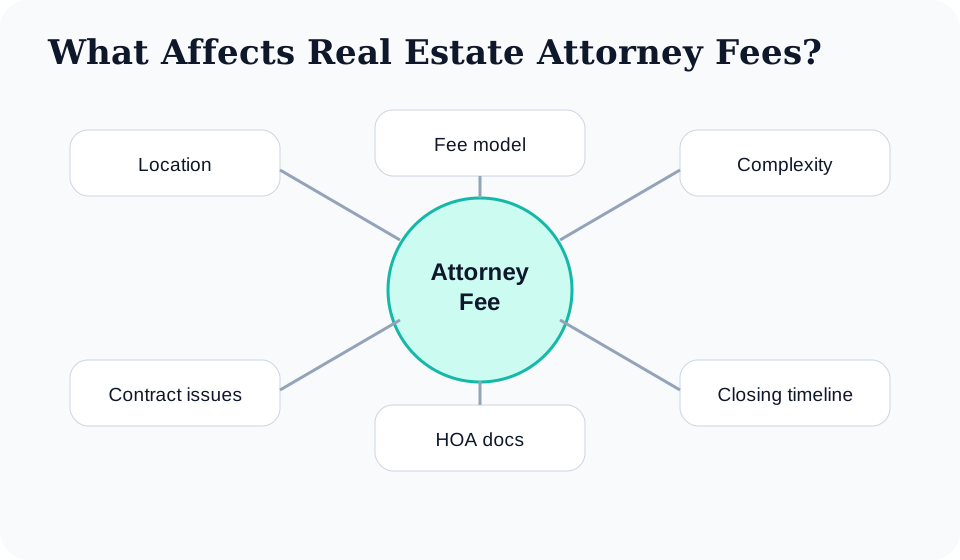
Fees can vary because of:
- location and local closing practices
- attorney experience and availability
- flat fee vs hourly billing
- contract complexity
- title or ownership problems
- lender or closing timeline pressure
- negotiation back-and-forth
- HOA or condo document complexity
- whether litigation, disputes, or unusual terms are involved
Be careful with any article that promises one universal answer to how much does a real estate attorney cost. The better question is: "What specific service do I need, what is included, and what could increase the fee?"
When a buyer should consider legal review
Buyers commonly consider legal review when:
- they do not understand contract consequences
- earnest money could be at risk
- a contingency deadline is approaching
- the seller proposes unusual language
- inspection or disclosure issues are disputed
- title has exceptions or unclear items
- the property is part of an HOA or condo association with complex rules
- rental restrictions, assessments, litigation, insurance, or reserve concerns appear
- the transaction involves estate, trust, divorce, tenant, or occupancy complications
This does not mean every question requires an attorney. It means buyers should know where agent guidance ends and legal advice begins.
What to organize before calling an attorney
Before calling, gather the documents and write down the exact decision you need help with. "Is this a bad deal?" is hard to answer quickly. "Can you review this assessment language and explain my options before the document deadline?" is more useful.
Organize:
- purchase agreement and addenda
- inspection report and repair requests
- seller disclosures
- title report or commitment if available
- HOA or condo documents
- fee schedule and assessment notices
- lender or closing deadlines
- a short list of questions in priority order
HOA and condo documents buyers should review
HOA and condo documents can create both practical and legal questions. Review:
- CC&Rs or declaration
- bylaws
- rules and regulations
- budget and financial statements
- reserve study or reserve summary
- meeting minutes
- insurance summary and deductibles
- litigation or claims notices
- rental restrictions, lease minimums, and caps
- pet, parking, vehicle, and architectural rules
- resale certificate or estoppel information where applicable
- special assessments approved, pending, or discussed
How to reduce wasted attorney time by preparing better questions
Legal time is most useful when the facts are organized. Instead of sending a pile of documents with no context, create a short summary:
- the property type
- the deadline
- the contract section or document page that worries you
- what you want to do with the property
- what answer you need before deciding
Example: "We are buying a condo and may rent it in two years. Page 18 says rentals require board approval and there may be a cap. Can you review whether this language creates a legal risk for our plan?"
What HOA Bot can and cannot do
HOA Bot can help surface issues in association documents so you can ask better questions earlier. It can summarize rules, fees, restrictions, reserve concerns, assessment clues, rental limits, pet rules, parking rules, and meeting minute issues.
HOA Bot cannot give legal advice, interpret your legal rights, replace an attorney, negotiate for you, or tell you whether to remove a contingency. Use it as a first-pass document review tool, not as a legal decision-maker.
Example scenario
A buyer is considering a condo. The purchase agreement deadline for document review is approaching. The condo packet includes rental restrictions, a recent budget increase, meeting minutes discussing roof work, and a note about possible special assessment concerns.
The buyer should not ask an attorney to "review everything" with no direction if time and budget are limited. A stronger preparation list would be:
- We may need to rent the unit later. Please review rental restriction language.
- We see possible roof assessment discussion. Please review whether the documents show any binding obligation or disclosure concern.
- We want to know what questions to send before the document deadline.
- We need to understand options if the answers are not satisfactory.
Checklist: what to prepare before attorney review
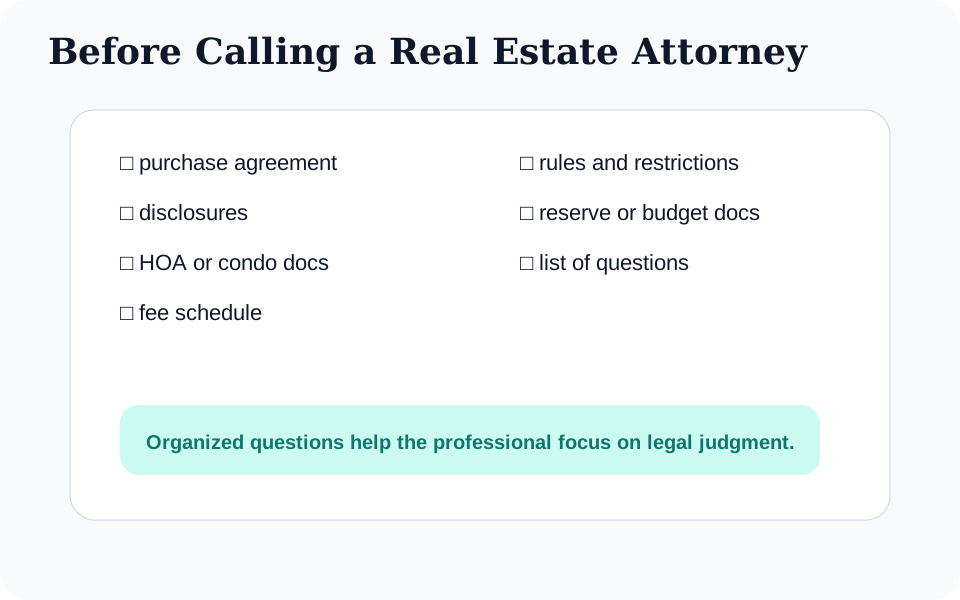
- purchase agreement
- disclosures
- HOA or condo docs
- fee schedule
- rules and restrictions
- reserve or budget docs
- title report if available
- inspection report if relevant
- list of questions
- deadline summary
FAQ
Are real estate attorney fees required?
Requirements vary by state, closing process, and transaction. Some buyers use attorneys because local practice requires or strongly favors it. Others use attorneys only for specific questions. Ask a local professional what applies to your transaction.
How much does a real estate attorney cost?
There is no universal amount. Cost depends on location, fee structure, scope, complexity, and urgency. Ask whether the attorney charges a flat fee, hourly rate, consultation fee, or closing package fee.
What are attorney fees for closing?
Closing attorney fees may cover document preparation, document review, title-related work, settlement coordination, closing attendance, or other services depending on the state and engagement agreement.
Can a real estate attorney review HOA documents?
Yes, many real estate attorneys can review HOA or condo documents, especially when the buyer has legal questions about restrictions, assessments, rental limits, owner obligations, or contract rights.
Can HOA Bot replace attorney review?
No. HOA Bot can help summarize documents and surface questions, but it does not provide legal advice or replace a qualified attorney.
What should I ask before hiring a real estate attorney?
Ask what service is included, how fees are calculated, what documents they need, how quickly they can respond, and what would count as additional work.
Conclusion
Real estate attorney fees are easiest to understand when you define the job. Are you paying for contract review, closing help, title guidance, HOA document questions, or a dispute? Organize your documents, write better questions, and use professional legal advice when the decision affects your rights, money, or ability to cancel under the contract.