
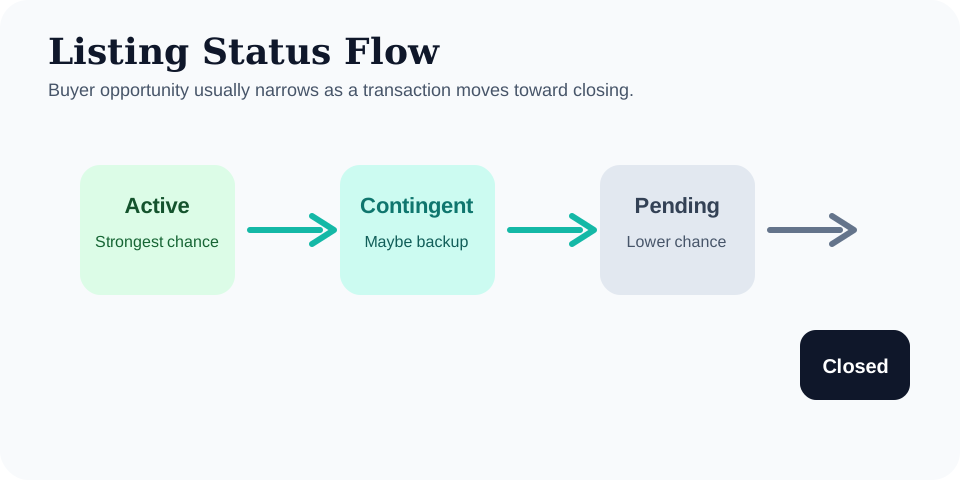
Quick answer: Pending vs contingent comes down to how much of the deal is still conditional. A contingent home has an accepted offer, but one or more protections or conditions may still be open. A pending home is usually further along and closer to closing. Buyers may sometimes make backup offers on either status, but the practical opportunity is usually higher with contingent homes than pending homes.
For the basics of what contingent means in real estate, start there. This guide focuses on side-by-side buyer strategy.
Table of contents
- Pending vs contingent: simple definition
- Contingent vs pending vs under contract comparison table
- Can you make an offer on a contingent home?
- Can you make an offer on a pending home?
- Why a contingent deal can still fall through
- Why a pending deal can still fall through
- What buyers should ask their agent
- What agents should explain to clients
- Where HOA documents fit into the timeline
- Example scenarios
- Common mistakes
- FAQ
Pending vs contingent: simple definition
Contingent vs pending real estate status is a signal, not a complete explanation. Both usually mean the seller accepted an offer. The difference is the stage of risk.
Contingent means the contract still depends on a condition. Examples include inspection, financing, appraisal, sale of another home, title, or HOA document review.
Pending means the transaction is moving toward closing and many major conditions may already be satisfied or waived. But pending does not mean closed. A pending transaction can still fail if financing, title, closing funds, walkthrough issues, or documents create a last-minute problem.
Under contract is broader. The phrase what does under contract mean in real estate usually means the parties have a signed agreement, but it does not tell you which protections remain.
Contingent vs pending vs under contract comparison table
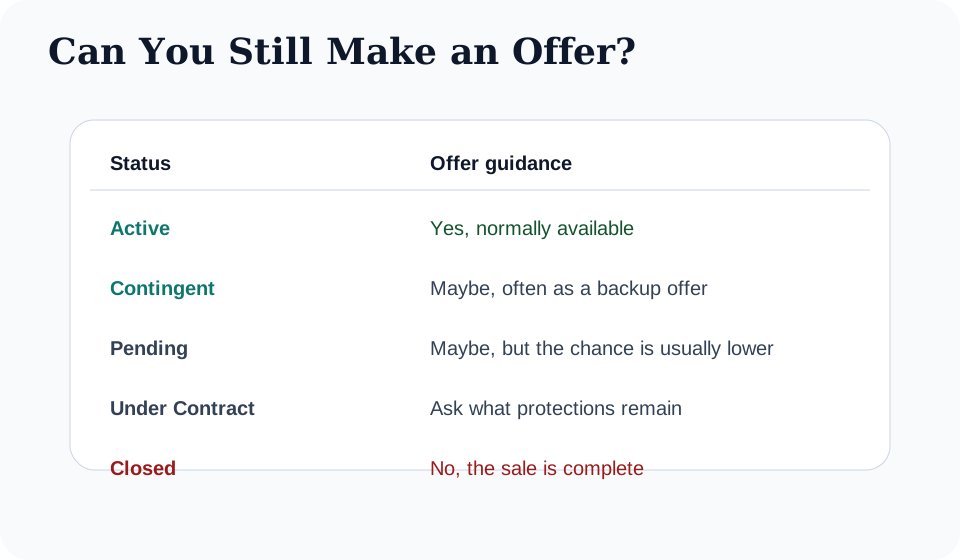
| Status | Meaning | Buyer opportunity | Questions to ask | | --- | --- | --- | --- | | Active | No accepted offer shown | Highest | Is the seller reviewing offers now? | | Contingent | Accepted offer with open conditions | Possible backup offer | Which contingency is open and when does it expire? | | Pending | Accepted offer moving toward closing | Lower, but not impossible | Is the seller accepting backups? | | Under contract | Signed contract; exact stage varies | Depends on details | Is it contingent, pending, or another local status? | | Closed | Sale completed | None | Are there similar listings to watch? |
Can you make an offer on a contingent home?
Sometimes. A seller may accept a backup offer in case the current buyer cancels or fails to satisfy a contingency. Whether this is worthwhile depends on the property, seller instructions, local practice, and your agent's read on the situation.
A backup offer can make sense when:
- the home strongly fits your needs
- the current deal has a meaningful unresolved issue
- your offer can be ready without distracting you from better options
- you understand how backup position works in your contract
Do not build your whole home search around one contingent property. Keep looking unless your agent has a strong reason to believe the first deal may fail.
Can you make an offer on a pending home?
Sometimes, but the odds are usually lower. The pending meaning real estate buyers should remember is "not closed yet," not "available." Some sellers will still accept backup offers. Others will not want distractions unless the current transaction shows signs of trouble.
Ask your agent to find out whether backup offers are being considered. If not, use the listing as market information and move on.
Why a contingent deal can still fall through
A contingent deal can fall through because the condition matters. Common reasons include:
- inspection issues are larger than expected
- buyer and seller cannot agree on repairs or credits
- financing is denied or delayed
- appraisal comes in low and no agreement is reached
- buyer cannot sell their current home
- title issues appear
- HOA or condo documents reveal restrictions, fees, litigation, reserve concerns, insurance issues, or assessment risk
For HOA properties, document issues often surprise buyers because they are not visible during a showing. A pool, gate, or clubhouse may be obvious. Rental caps, pet restrictions, transfer fees, reserve shortages, and special assessment discussions are not.
Why a pending deal can still fall through
Pending deals are usually closer to closing, but they can still fail. Problems may include final loan conditions, wire or closing funds issues, title defects, insurance problems, damage discovered at walkthrough, buyer job changes, unresolved condo project approval, or failure to sign documents on time.
That is why buyers should not treat pending as closed when tracking comps. A pending sale is useful market evidence, but the final price and terms are not confirmed until closing data is available.
What buyers should ask their agent
- Is the home contingent, pending, under contract, or closed?
- What does that label mean in this MLS?
- Is the seller accepting backup offers?
- Which contingency remains open, if any?
- When are the key deadlines?
- Has the buyer completed inspection, appraisal, financing, title, and HOA review?
- Are there similar active listings we should prioritize instead?
These questions turn a status label into a decision.
What agents should explain to clients
Agents should avoid using status terms as shorthand without context. Buyers need to understand probability, process, and emotional risk.
Explain:
- why contingent is not the same as active
- why pending is not the same as closed
- how backup offers work locally
- what signs suggest a deal is shaky
- why buyers should keep searching
- how deadlines control due diligence
- where buyer due diligence fits after an offer is accepted
Where HOA documents fit into the timeline
HOA documents usually matter after an offer is accepted, but smart buyers ask about them before writing or soon after acceptance. The tighter the contingency period, the less time there is to read the packet.
Review documents for:
- monthly dues and fee increases
- special assessments approved, pending, or discussed
- reserve study and reserve funding
- budget and financial statements
- insurance and deductibles
- litigation or claims
- rental restrictions and leasing minimums
- pet, parking, vehicle, and architectural rules
- move-in, transfer, capital contribution, and administrative fees
Example scenarios
Buyer sees a contingent condo
The condo is perfect on paper, but the listing is contingent. The buyer asks their agent whether the seller is accepting backups and learns the current buyer is still reviewing HOA documents. A backup offer may be worth considering, but the buyer should also ask what documents would matter if they became the primary buyer.
Buyer sees a pending townhome
The townhome is pending and the listing agent says the seller is not seeking backups. The buyer should not wait around. Instead, the agent can use it as a comp clue and help the buyer monitor similar active townhomes.
Buyer sees an under contract property with HOA docs not fully reviewed
The property is under contract, but the buyer has not received the full association packet. The buyer should track the document deadline, request missing items, and avoid removing protections until fee schedules, restrictions, budgets, reserves, and meeting minutes are reviewed.
Common mistakes
- Treating pending as closed.
- Treating contingent as fully available.
- Forgetting to ask whether backup offers are allowed.
- Obsessing over one listing and missing better active homes.
- Ignoring the reason a deal is contingent.
- Removing document review protections before reading HOA materials.
- Assuming under contract means the same thing in every market.
FAQ
What does pending mean in real estate?
Pending means a seller has accepted an offer and the transaction is moving toward closing. It usually signals that major conditions are further along, but the sale is not complete until closing.
Is contingent better than pending for buyers who still want the house?
Usually yes, because contingent often means there are still open conditions. But the only reliable answer comes from your agent asking whether backup offers are being accepted.
What is the difference between contingent vs under contract?
Under contract is a broad phrase meaning a signed agreement exists. Contingent is more specific because it suggests the contract still depends on one or more conditions.
Can a pending home come back on the market?
Yes. Pending homes can return to active status if the deal fails before closing. Reasons may include financing, title, inspection, closing funds, or final walkthrough problems.
Should I submit a backup offer?
It can make sense if the home is a strong fit and your agent confirms the seller will consider backups. Do not stop your search unless you have a clear strategy.
Do HOA documents affect pending vs contingent status?
They can. If document review remains open, the property may stay contingent. If documents are accepted or the review period passes, the transaction may move closer to pending depending on local status rules.
Conclusion
Pending, contingent, and under contract are not just labels. They tell buyers where a property may be in the deal timeline and how much opportunity may remain. The smartest move is to ask what the status means locally, whether backup offers are possible, and what due diligence still matters before deadlines disappear.