
Calculator
Real Estate Commission Calculator
Estimate commission dollars from a sale price and commission terms. This is a planning tool, not a statement about what any party must charge or pay. Commission terms are negotiable and depend on the agreement.
Total commission
$25,000
Listing side
$12,500
Buyer side
$12,500
Agent gross before split
$12,500
Agent net after split and fees
$8,750
Quick explanation: This real estate commission calculator estimates commission dollars from a sale price and percentage inputs. You can enter total commission percentage, listing agent percentage, buyer agent percentage, optional brokerage split, optional referral fee, and optional transaction fee. Commissions are negotiable and vary by market, brokerage, listing agreement, buyer agreement, transaction terms, and applicable rules. This calculator is for planning, not a statement of standard or required commissions.
If you are evaluating the overall risk in a deal, commission is only one piece. Buyers and agents should also consider buyer due diligence, financing, inspection, title, insurance, and HOA document review.
Table of contents
- How real estate commission is calculated
- Example calculation
- Listing agent vs buyer agent commission
- Broker splits and referral fees
- What sellers should understand
- What agents should understand
- Why commission is only one part of deal risk
- Where HOA document review fits into buyer value
- FAQ
How real estate commission is calculated
At the simplest level, commission is calculated by multiplying the sale price by a commission rate.
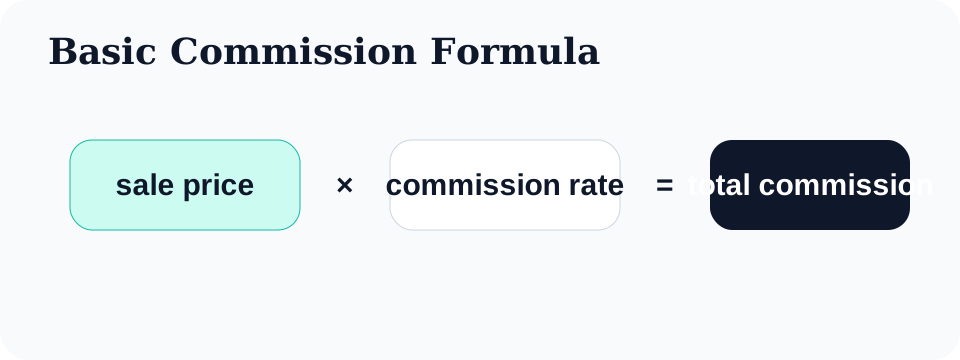
For example, if a property sells for $500,000 and the total commission rate entered is 5%, the total commission estimate is $25,000. That amount may then be allocated between sides according to the listing agreement, buyer agreement, MLS rules or offers where applicable, brokerage policies, referral arrangements, and transaction documents.
Do not assume a particular commission percentage is standard. Commission terms are negotiable and should be documented in the applicable agreement.
Example calculation
Assume these inputs:
| Input | Example | | --- | ---: | | Sale price | $500,000 | | Total commission percentage | 5% | | Listing agent percentage | 2.5% | | Buyer agent percentage | 2.5% | | Brokerage split to agent | 70% | | Referral fee | 0% | | Transaction fee | $0 |
The calculator would estimate:
- total commission: $25,000
- listing side commission: $12,500
- buyer side commission: $12,500
- estimated listing agent gross before split: $12,500
- estimated agent net after a 70% split and no extra fees: $8,750
If there is a referral fee or transaction fee, the estimated net changes. Agents should confirm how their brokerage calculates referral fees, caps, team splits, transaction fees, and other deductions.
Listing agent vs buyer agent commission
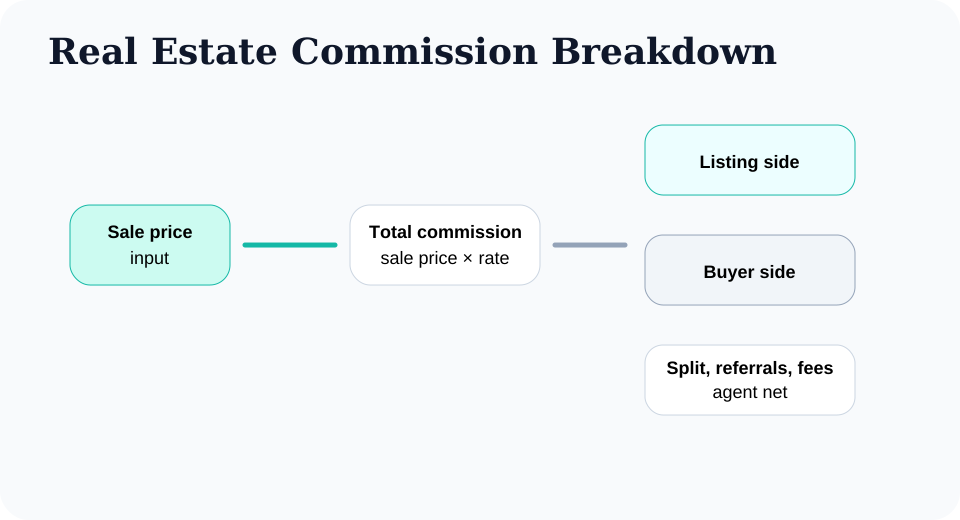
Listing side and buyer side commission are separate inputs because a transaction may allocate compensation differently across sides. A realtor commission calculator or real estate agent commission calculator is more useful when it lets you separate total commission from side-specific assumptions.
Sellers should read the listing agreement carefully. Buyers should read any buyer representation or compensation agreement carefully. Agents should explain compensation in plain English and avoid implying that one rate is required across all transactions.
Broker splits and referral fees
A real estate commission split calculator helps agents estimate what may remain after brokerage split and referral obligations.
Common deductions or allocations may include:
- brokerage split
- team split
- referral fee
- transaction coordinator fee
- franchise fee
- brokerage transaction fee
- cap or graduated split rules
- lead source fees
The calculator on this page keeps the model intentionally simple: it estimates listing side gross, subtracts referral percentage from that gross, applies the brokerage split, and subtracts a transaction fee. Your brokerage may calculate differently.
What sellers should understand
Sellers should understand what they are agreeing to pay, what services are included, how compensation is handled, what happens if the listing expires, and whether any administrative or transaction fees apply.
Ask:
- What commission or fee terms are in the agreement?
- Are there separate administrative, transaction, marketing, or cancellation fees?
- How are buyer-side compensation terms handled in this transaction?
- What services are included?
- How will net proceeds be estimated?
The right conversation is not only "What is the percentage?" It is "What am I agreeing to, what service am I receiving, and what are my net proceeds after all costs?"
What agents should understand
Agents should know their own gross-to-net math before a client asks. A commission may look strong at the closing table but change after brokerage split, referral fee, team split, transaction fee, taxes, marketing costs, and unpaid time.
Agents should also be ready to explain their value in specific terms. For HOA, condo, and townhome transactions, that value includes helping clients understand association documents, timelines, restrictions, fees, and risk.
Why commission is only one part of deal risk
Commission is visible because it is a number. But buyer and seller risk often sits in documents.
A buyer may care more about:
- inspection findings
- appraisal gap
- financing conditions
- title exceptions
- insurance cost
- HOA fees and assessment risk
- rental or pet restrictions
- closing timeline
- legal rights under contingencies
A seller may care about offer reliability, buyer financing, inspection negotiation risk, appraisal risk, and whether association documents could make a buyer cancel.
Where HOA document review fits into buyer value
For HOA and condo properties, document review is a real service moment. Agents can help buyers understand what to request, which deadlines matter, and which questions should go to the association, lender, inspector, or attorney.
HOA Bot does not replace legal advice or an agent's professional judgment. It helps organize the document review so buyers and agents can focus on decisions instead of searching through dozens or hundreds of pages manually.
FAQ
How do I calculate real estate commission?
Multiply the sale price by the commission rate. For example, $500,000 multiplied by 5% equals $25,000. Then apply side splits, brokerage splits, referral fees, and transaction fees as applicable.
Are real estate commissions standard?
No. Commission terms are negotiable and vary by market, brokerage, agreement, services, and transaction. Always rely on the written agreement for the actual terms.
What is a seller commission calculator?
A seller commission calculator estimates how much commission may be paid from a sale price. A full seller net sheet should also include loan payoff, taxes, concessions, closing costs, prorations, and other fees.
What is estimated agent gross before split?
It is the side commission before brokerage split, referral fee, transaction fee, team split, taxes, or other deductions. This calculator uses listing side commission as the agent gross example.
Why does the calculator include buyer agent percentage?
Separating listing side and buyer side makes the allocation clearer. Compensation structures vary, so the calculator lets users model each side rather than assuming one split.
Does commission tell me whether a deal is good?
No. Commission is only one financial input. Buyers and sellers should also evaluate property condition, financing, appraisal, title, insurance, HOA documents, closing costs, and contract risk.
Conclusion
A real estate commission calculator is useful when it separates sale price, total commission, side allocation, brokerage split, referral fee, and transaction fees. Use it to understand the math, then read the actual agreement carefully. For HOA and condo deals, remember that commission is only one part of value. Clear document review can prevent confusion, late surprises, and better questions before deadlines expire.